


Contact us at
hello@thenerve.co

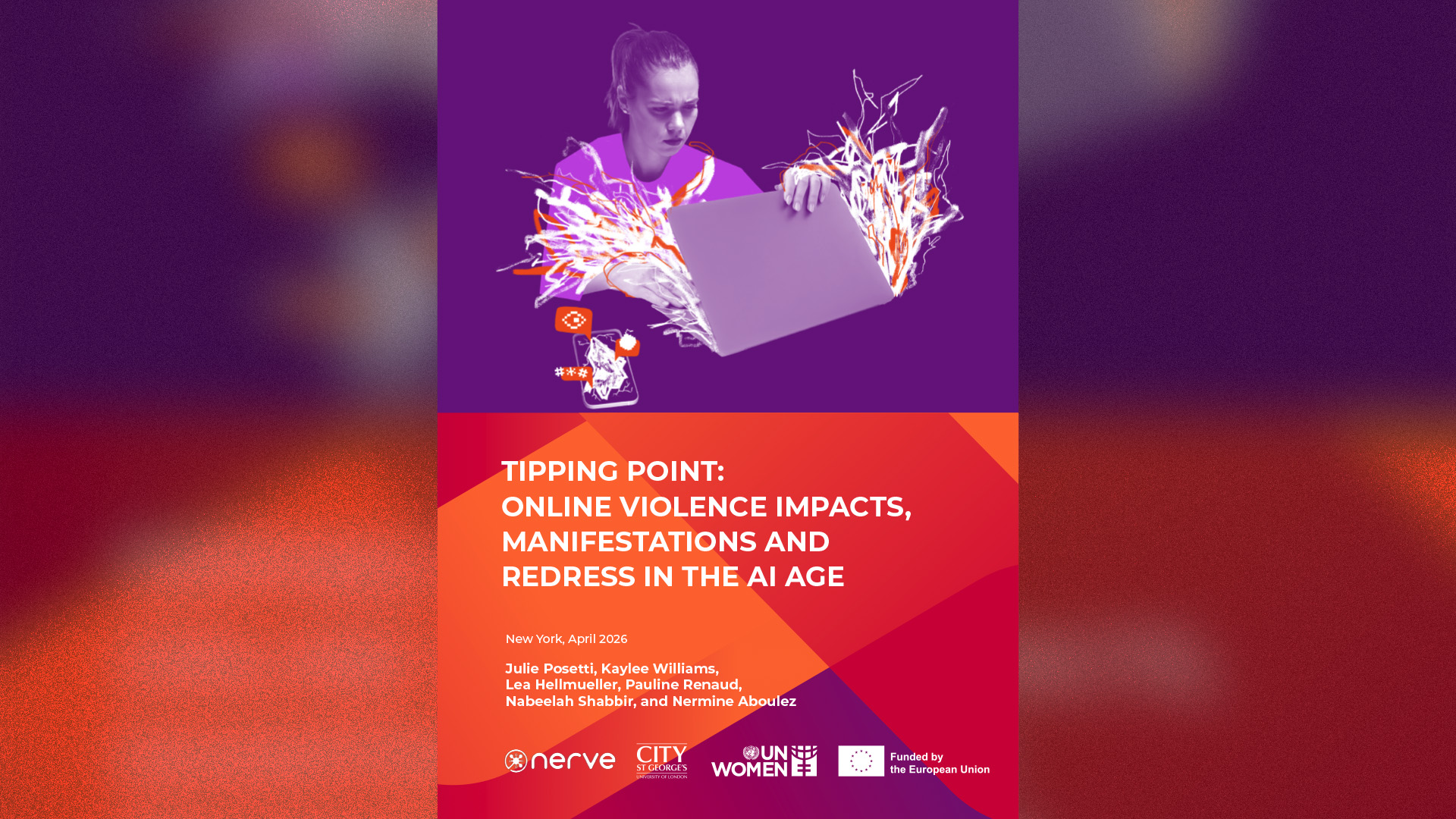
UN Women study finds reports to police of online violence against women journalists double since 2020, with one in four surveyed women journalists experiencing related anxiety and/or depression
Download the full report here.
New York, USA — AI-enabled image-based abuse against women in public life has escalated to alarming levels, along with severe mental health consequences and surging self-censorship, according to a new report published by UN Women. The report, titled Tipping Point: Online Violence Impacts, Manifestations and Redress in the AI Age is the second installment in the Tipping Point series, produced by the Information Integrity Initiative for UN Women's ACT to End Violence Against Women programme, in partnership with City St George's University of London, Unesco and the International Center for Journalists.
Key findings include:
As our 2025 survey was based on a UNESCO-published global survey of women journalists and media workers fielded in 2020 involving an overlapping cohort of respondents, we are also able to identify the following trends in self-censorship and legal redress among women journalists:
Launching the report, III Director Prof. Julie Posetti (PhD) said: “In addition to responsive mechanisms like investing in the development of more accessible and sophisticated tools to better detect, block and monitor AI-assisted online violence, we must act urgently to regulate in ways that prevent the development and distribution of technologies designed to abuse women and girls, not just the publication of the outputs. We urgently need human-rights-by-design and safety-by-design standards to be enshrined in law. And we need the political will to match, to ensure enforcement.”
This report was published in April 2026. Download the full report here.


